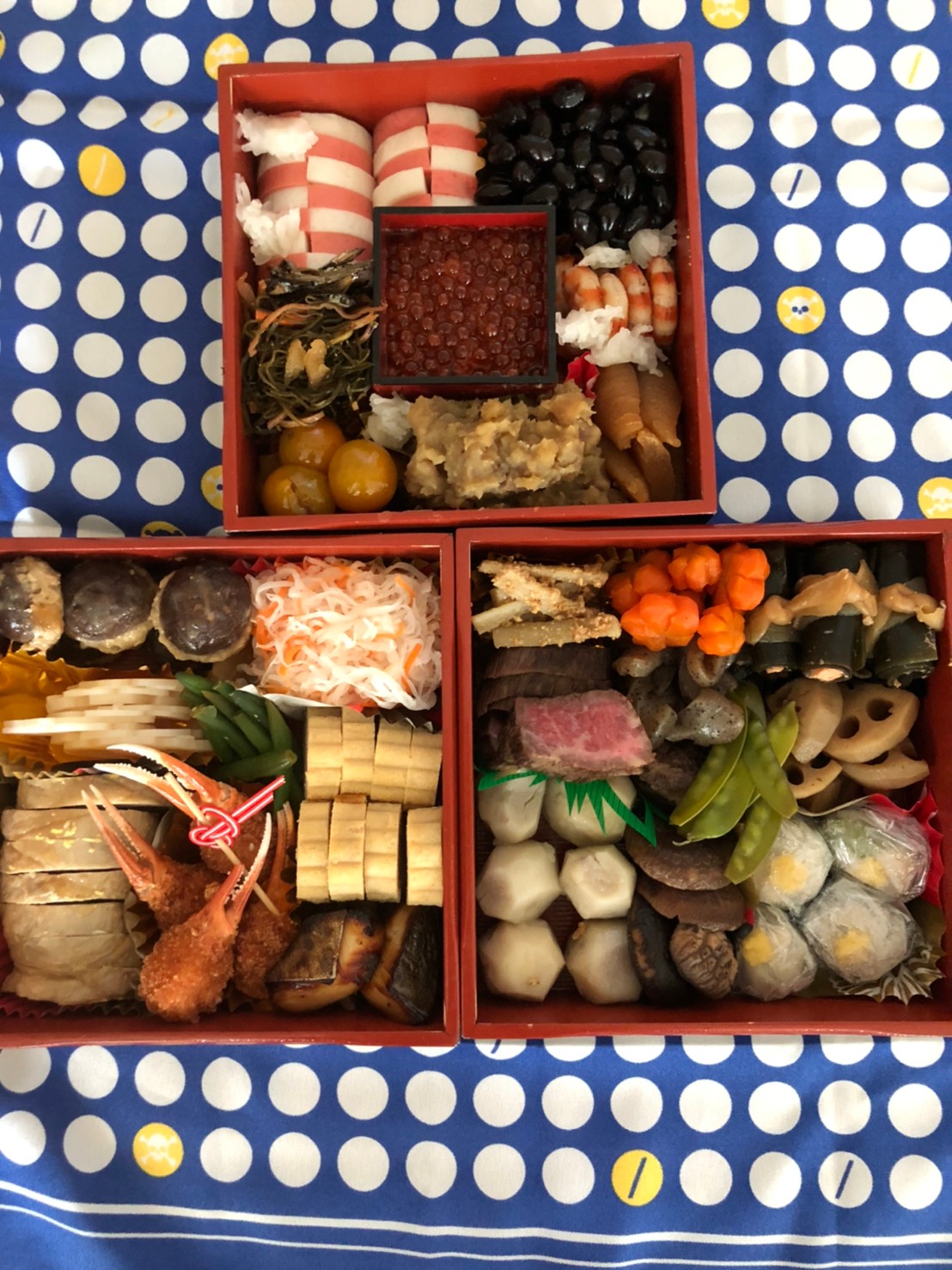
“Osechi” is a seasonal and special dish for the new year. “Osechi” is not a single dish but a collection of many dishes. The selection of dishes depends on families and restaurants. We used to cook all the dishes at home but nowadays, we often purchase the complete “osechi” or buy some of the dishes at supermarkets.
“Osechi” is derived from offerings that we do every seasonal change called “sekku”. We cook osechi at the end of the year and eat this dish during new year’s celebration with family. Some of the dishes in osechi have meanings.
Kuromame (black beans):
Hard work and live in health.
Kazunoko (egg of herrings)
Because herrings lay numerous eggs, it means prosperity of descendants.
Tazukuri (baby fish of sardines)
We used to use this fish as fertilizer so that it makes a good rice field.
Kamaboko in redo and white (fish cakes)
White expresses pureness and the red avoids troubles.
Kuri-kinton (Chestnuts in sweet potato pastes)
In Japanese Kanji, “kinton” writes “金団”, group of gold. Therefore, this dish brings wealth.
These are the “must-have” dishes within “osechi”. I prepare a lot more dishes. We usually make boxes of osechi. Three layers are the most common. There are particular dishes to be placed in each layer.
<First layer>
Kamaboko (fish cakes)
Kuro-mame (black beans)
Kuri-kinton (chestnuts in sweet potato pastes)
Kazunoko (eggs of herrings)
Shrimps
chrysanthemum by white radish
Tazukuri (baby fish of sardines)
Ikura (salmon eggs)
Matsumae-zuke (pickles of kombu)
Kumquat in syrup
<Second layer)
Fried crab claw
Namasu (pickles of white radish and carrot)
Su-renkon (pickles of lotus roots)
Rolled chicken
Saikyo-yaki (grilled fish – miso taste)
Urajiro-shiitake (stuffed shiitake mushrooms)
Date-maki (sweet omelet)
Pickles of green beans
<Third layer>
Kobu-maki (kombu roll)
Roast beef
Tataki-gobo (smashed burdock)
Sato-imo (taro potato)
Carrot
Lotus roots
Konjac
Shiitake
Kinusaya (snow peas)
 I LOVE COOKING! 料理大好きクラブ